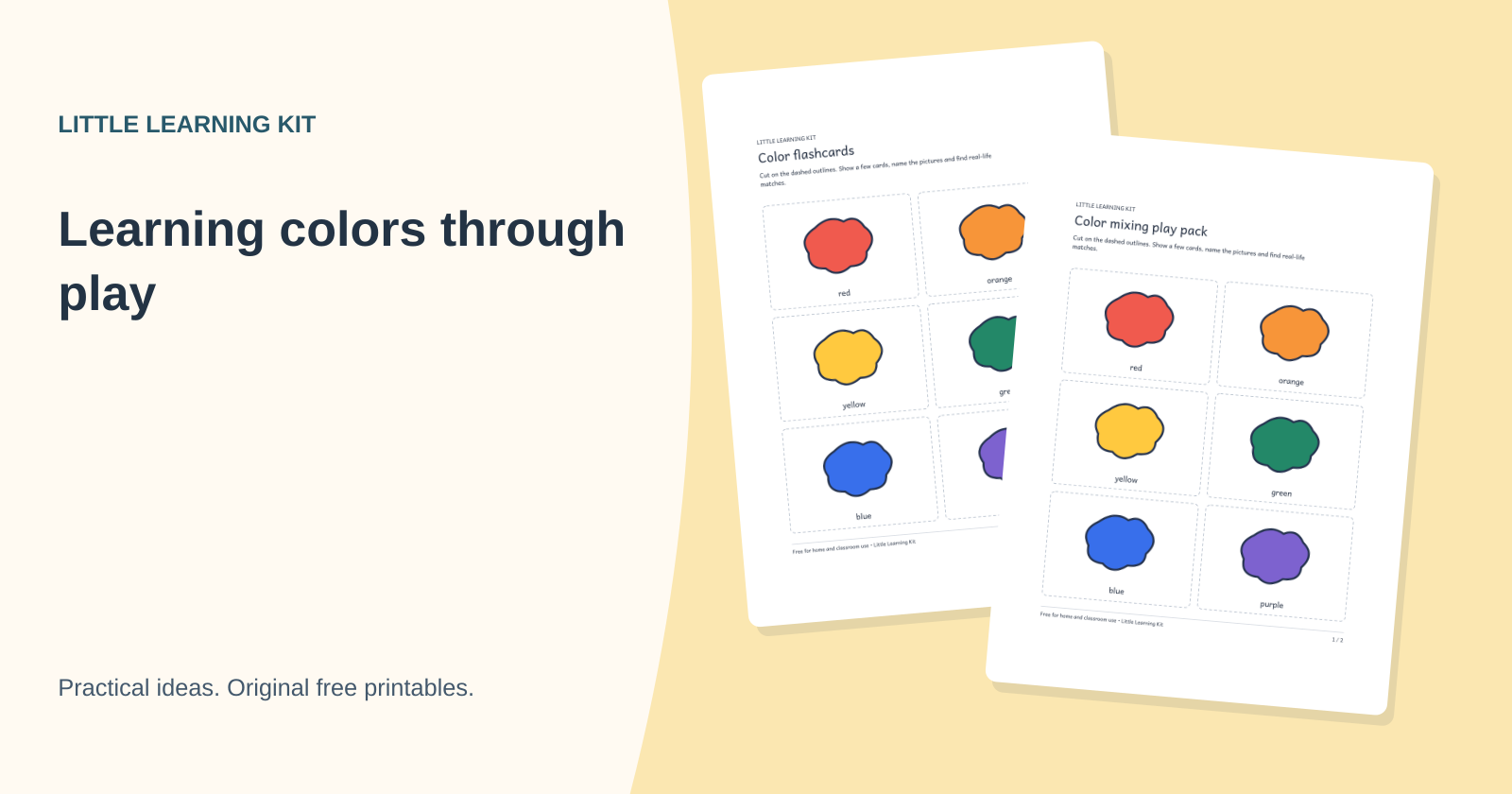
Start by matching real objects of a similar color, then model the color word in conversation. Matching a color and remembering its name are different skills, so allow pointing, sorting and talking as useful responses.
Start with real things you can compare
A color word is easier to discuss when there is something in front of you. Put a red card beside a red toy and say what connects them. Then compare a different red object. You are showing that the word can describe many things, not just the first picture on a flashcard. Keep the selection small enough to look at comfortably.
Choose clear examples for the first game. Two similar blue-green shades invite an interesting discussion, but they are not the easiest starting point for finding a named color. A red object and a blue object make a simpler choice. You can introduce ambiguous shades later, when noticing their differences becomes part of the fun.
Separate matching from remembering a word
A child can match similar colors without recalling their names. They can also enjoy saying color words before consistently matching them to objects. Try an activity that reveals what kind of help is useful: put two cards down and ask which looks like a toy, or name a color and invite a point. Those are different tasks.
Model the word in a sentence rather than repeating “What color is it?” after every choice. You might say, “You found the yellow block. This card is yellow too.” If a different word is offered, calmly show the example again. There is no need to require a corrected answer before the child can continue playing.
| Task | Example prompt | Helpful response |
|---|---|---|
| Match | Can you find another one like this? | Pointing or placing two similar colors together |
| Choose from a name | Can you find the blue one? | Choosing an object without having to say the word |
| Name | What color would you call this? | A color word, a comparison or a discussion of shades |
Sort a small collection together
Choose six large, safe objects and two color cards. Place each object near the card it resembles, talking about the visible part you mean. A patterned object may fit more than one group. Let it sit between the cards or choose a different object if you want an easier task. Explain the choice rather than treating the categories as a trick.
Change one part of the game next time. Keep the same objects and add another color, or keep two colors and find new objects. Ask your child to make a group for you to inspect. If they sort by size instead, notice the rule they chose; you can name that useful comparison and then offer color sorting as a separate round.
You can use the same small collection for a different conversation: count the objects together through play after sorting them by color.
Take a gentle color hunt
Pick one card and choose a small area to explore: the sofa, a bookshelf or the view from a window. Find something that resembles the color, say its object name and describe where you found the match. Pointing is enough. Nobody needs to collect objects or move around the room to participate.
For an outdoor version, an adult checks the route and any objects touched. Looking from a seat or through photographs works too. Try finding the same color on two very different objects, such as a coat and a flower. Talk about the match while leaving room for the shades to differ. A hunt does not need a timer or a winner.
Make room for shades and patterns
Put a light blue and a dark blue object together and introduce both descriptions. You can still call them blue while noticing that they are not identical. A useful question is “Which looks lighter?” rather than asking which is the only correct blue. Use the actual examples in front of you instead of arguing over a color remembered from another room.
Patterns add another layer. A sock might contain red, white and blue, so ask your child to point to the part they mean. For a repeating pattern game, use two familiar colors in a short line of large blocks. Describe the repeating pair, then take turns choosing what could come next. Leave complicated patterns for another activity.
Mix paint as an experiment
An adult can set up a small paint experiment using suitable washable products and a protected surface. Choose two colors, predict what might happen and mix a small amount on a separate surface. Put a sample on spare paper and describe the result. Try another mixture with different amounts if your child wants to investigate further.
Treat what happens as the result. Classroom paints differ, and a predicted bright mixture may turn out duller or darker. NSEAD’s color-mixing guidance emphasises experimentation and notes that the chosen paints affect the range of results. You do not need to correct a child’s painting until it matches a screen swatch. Keep brushes and paints organised enough to know what you mixed.
Use paint rather than coloured light for this particular activity. Our color-mixing pack supplies prompts for an adult-led paint experiment; it is not a scientific simulator. Follow the product guidance, keep paint away from mouths and offer a watching or choosing role if handling paint is not suitable.
Try one mixture at a time
- Put small amounts of two washable paints on a suitable surface.
- Make a mark with each color before mixing.
- Mix a little of each and make a third mark.
- Compare the actual result; add more of one paint if you want to investigate.
- Keep the dried sample and describe what happened rather than promise one exact shade.
Account for screens, printing and vocabulary
The same digital swatch can look different on another screen or printer. If a printed color is unexpectedly dark, use a real object as your reference rather than marking a close match wrong. Our low-ink setting is helpful for outline activities, but color-name cards need their colors. A black-and-white swatch cannot teach a visual distinction between red and green.
British “color” and American “color” describe the same topic. Families may also use more than one language, and a familiar word in another language is a meaningful response. You can acknowledge it and supply the word you are using for the current game. Avoid requiring the child to abandon a useful home-language label to take part.
Save a favorite color discovery
After a hunt or paint activity, invite the child to choose one discovery to remember. They might point to a particular mixture, name an object or ask an adult to draw it. Write their description on spare paper if they want you to. Keep the wording theirs: a description such as “the blue like my cup” can make the connection more memorable than replacing it with a formal shade name.
Keep the game open to different ways of taking part
Offer spoken labels, large clear examples and a way to point or choose without naming every color aloud. If a color distinction is difficult or not enjoyable, use a different sorting feature such as shape, size or texture. A game should not depend on distinguishing two subtle shades that even the adults disagree about.
For a first session, choose two cards and four familiar objects. Match them, let your child set you a turn, then finish with a favorite find. The cards can stay available for ordinary conversations without becoming daily testing equipment. If you have a persistent concern about vision or development, seek individual advice rather than using this color game as an assessment.
Sources & further support
General parent support, not an individual assessment or a school programme. Check your child’s setting for its chosen approach.