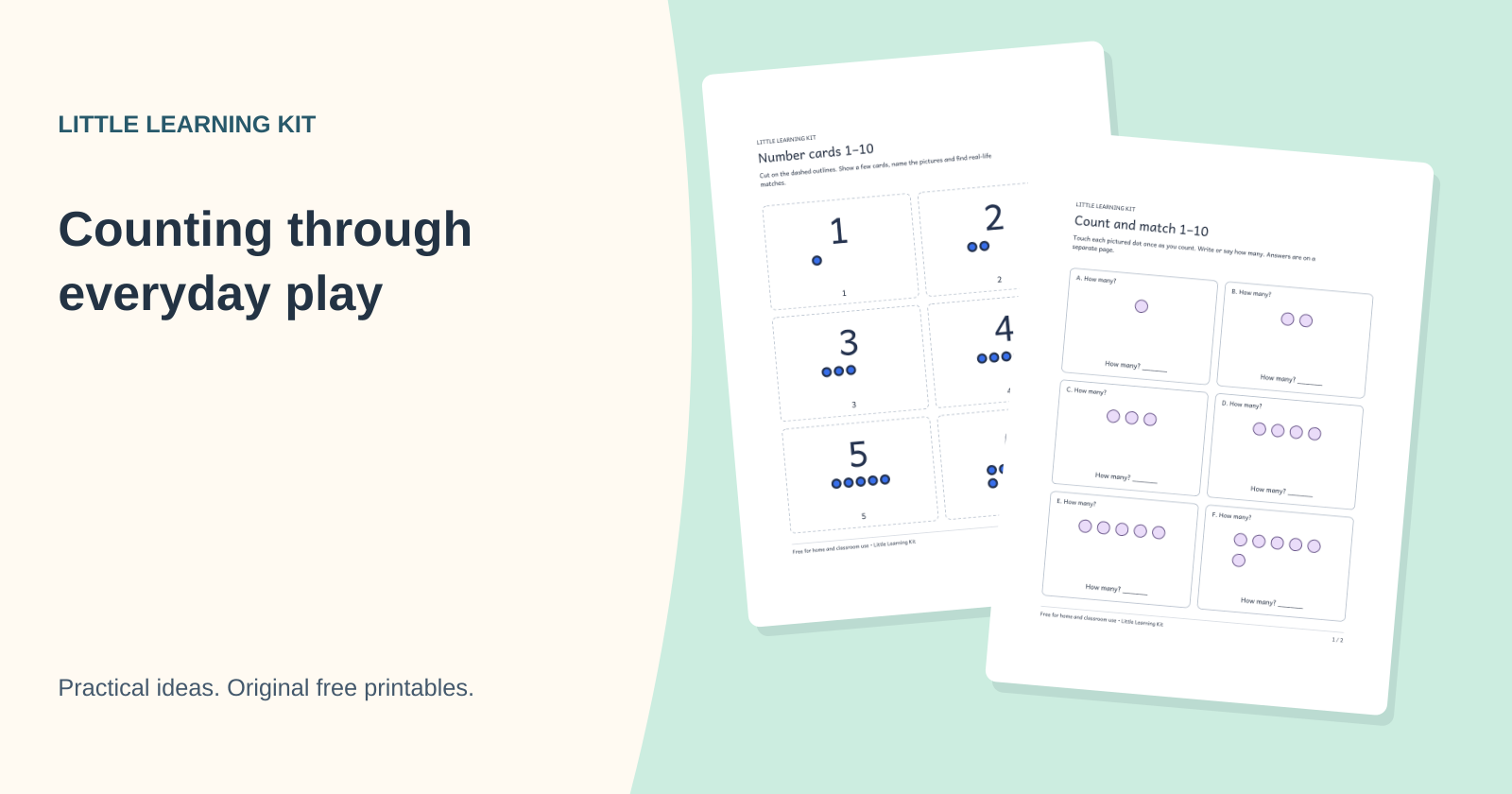
Counting through everyday play
Practical ways to explore small quantities with your child, from touching each object once to matching a group with a number card.
Read the guide ↗
Choose a small idea, see how it works and make it your own. Practical guides for shared learning, with original activities and free resources.
Practical ways to explore small quantities with your child, from touching each object once to matching a group with a number card.
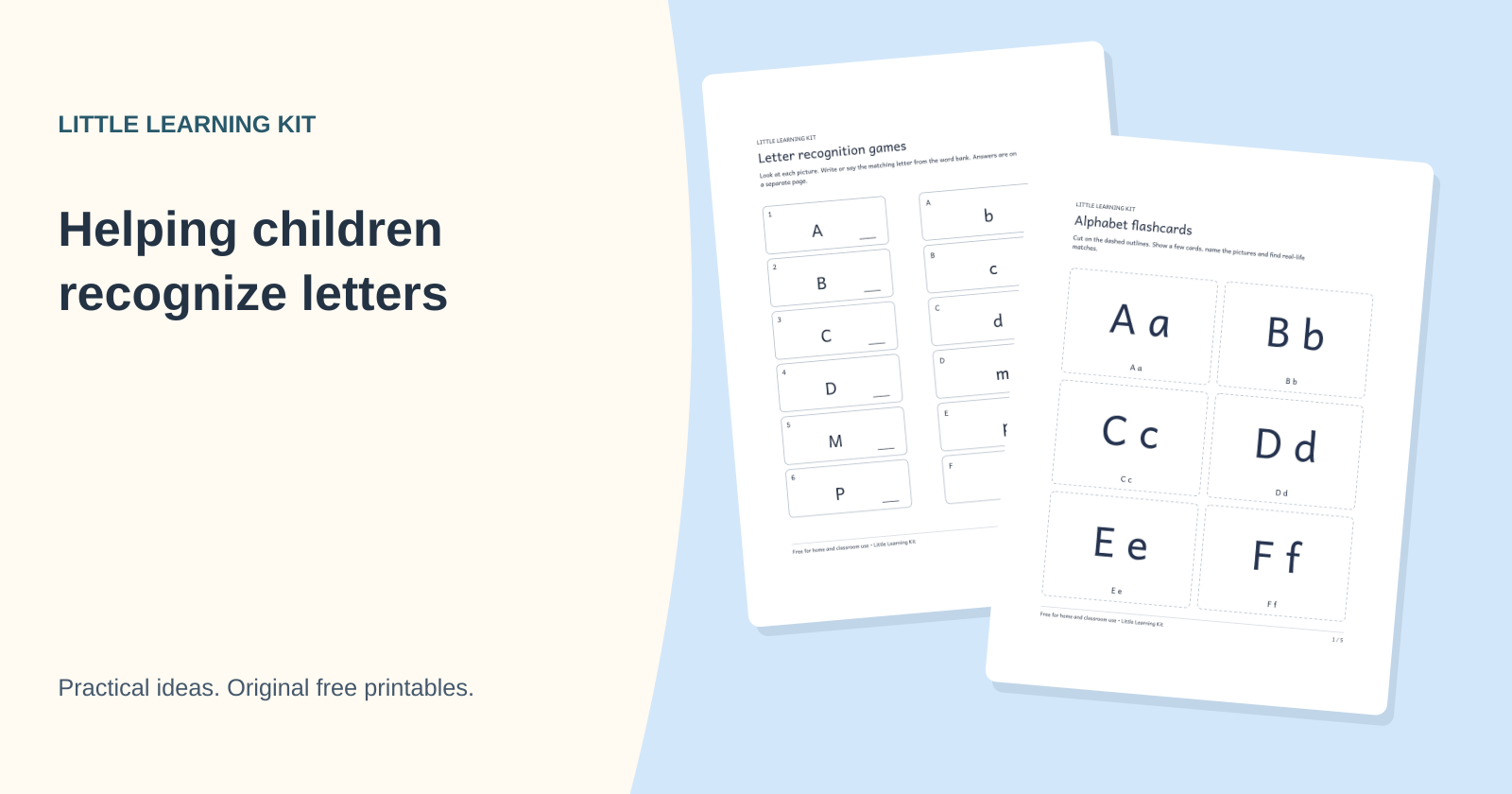
Read the guide ↗Start with a few meaningful letters, play matching games and make the difference between recognizing, naming and writing letters clear.
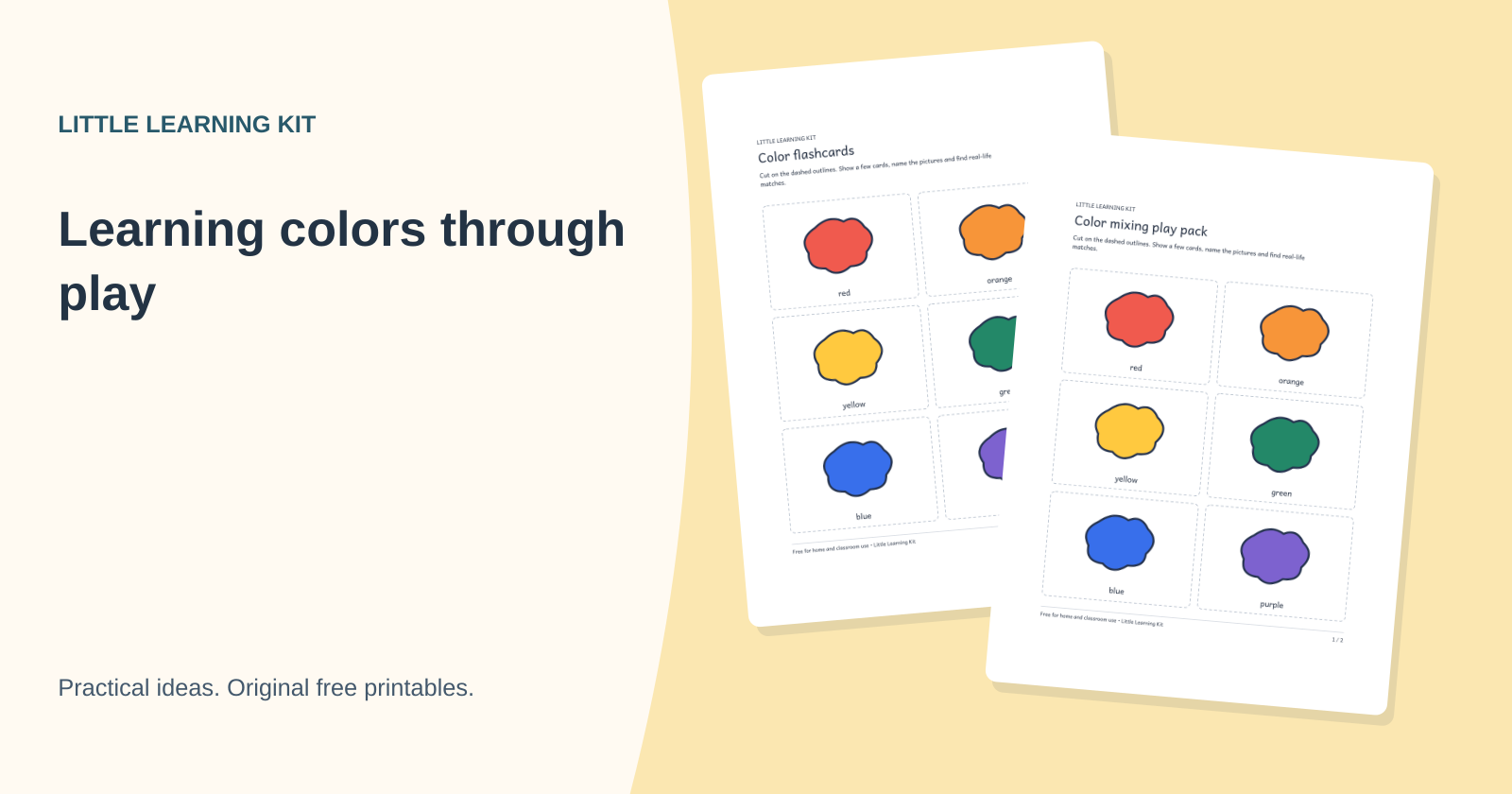
Read the guide ↗Use real objects, clear color cards and simple experiments to explore color words without turning play into a quiz.
Read the guide ↗Choose playful matching, mixing and pattern activities, with clear examples and flexible ways to make the task easier or harder.
Use real objects, clear color cards and simple experiments to explore color words without turning play into a quiz.
Read the guide ↗Help children connect amounts, number words and written numerals through practical games and original printable resources.
Practical ways to explore small quantities with your child, from touching each object once to matching a group with a number card.
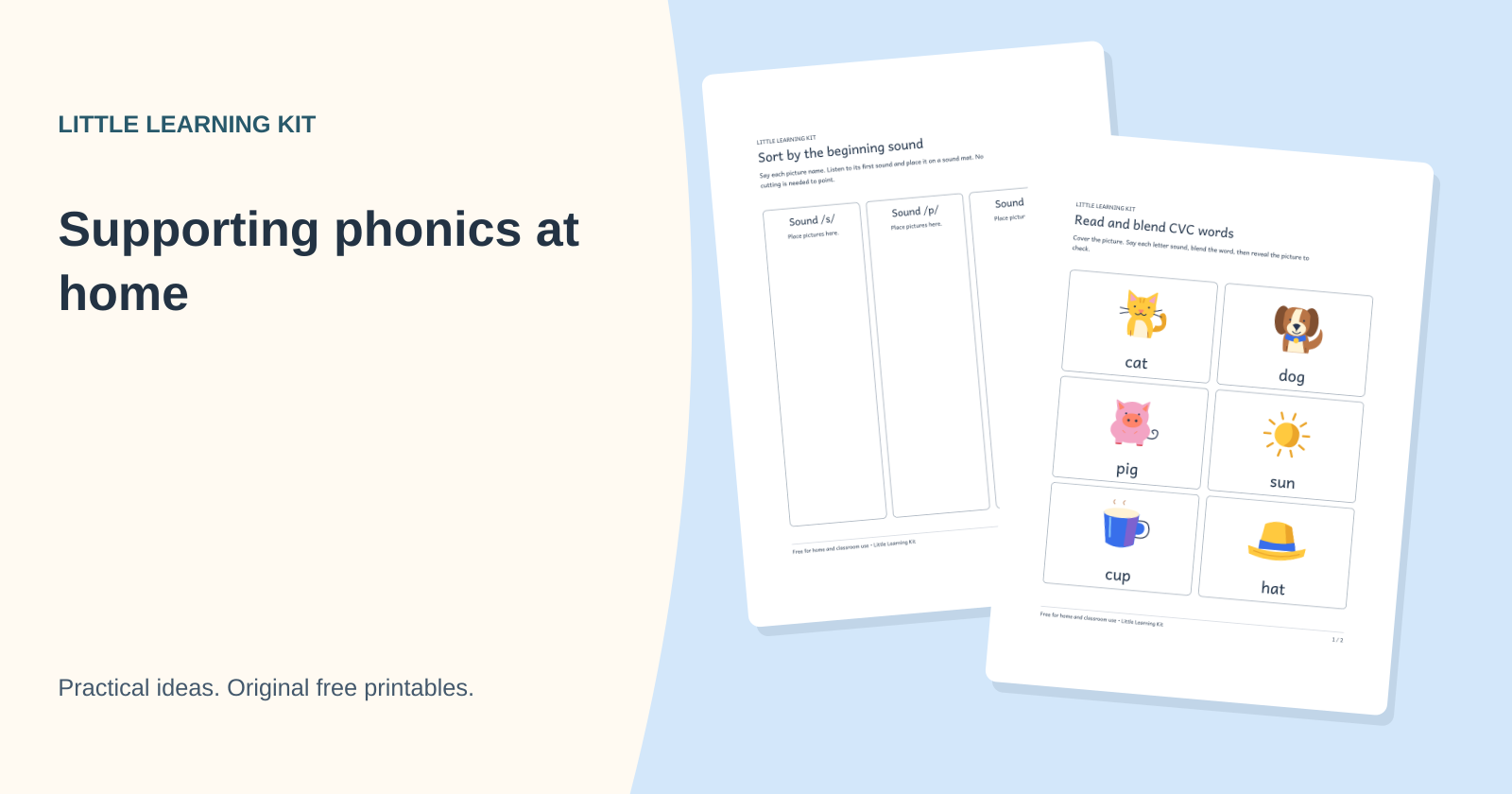
Read the guide ↗Find practical support for letter recognition, spoken sound games and early reading, while following your child’s setting where it uses a phonics programme.
Start with a few meaningful letters, play matching games and make the difference between recognizing, naming and writing letters clear.
Read the guide ↗A calm starting point for parents: understand letter names and sounds, follow the school’s approach and keep shared reading enjoyable.
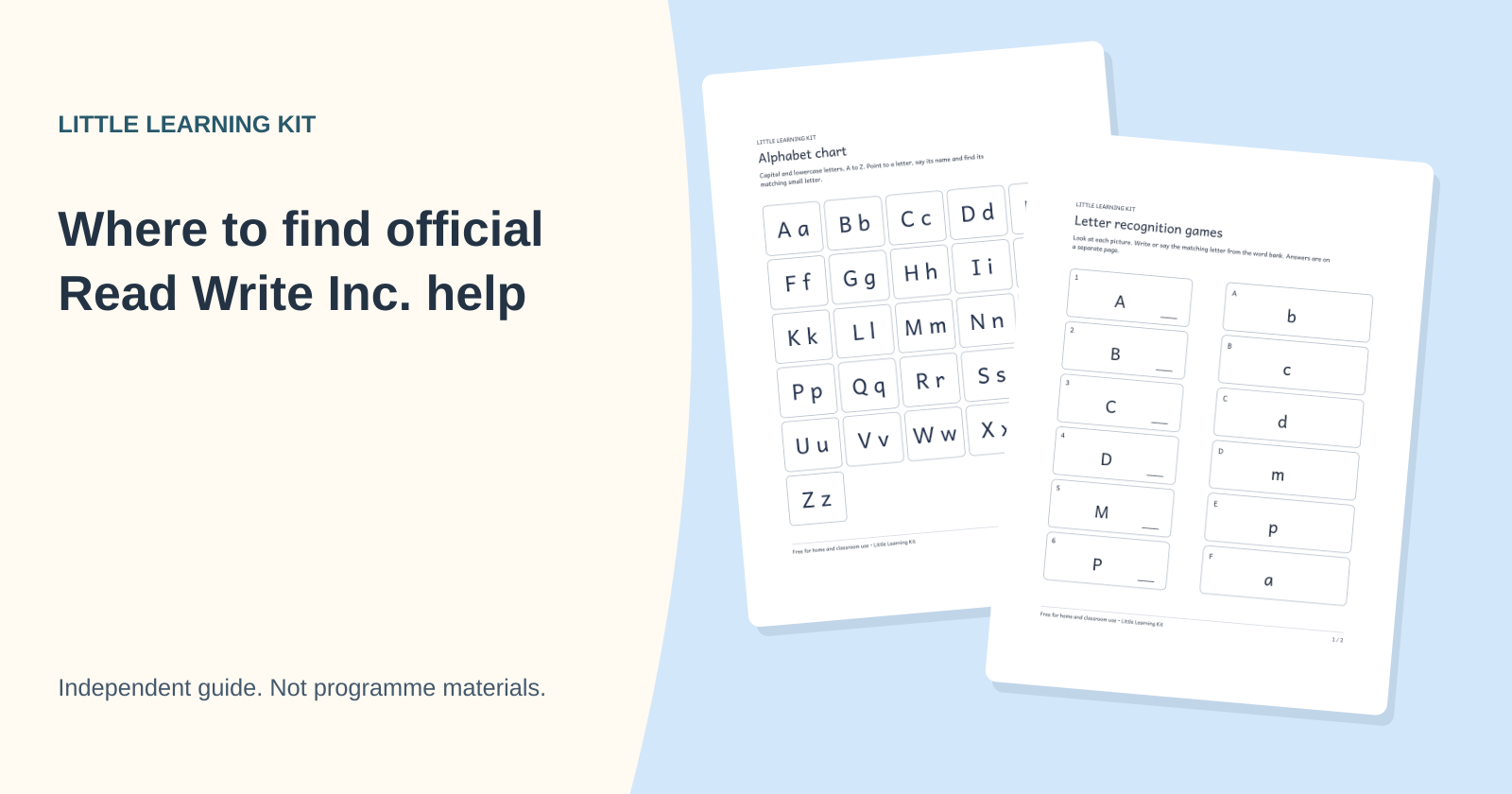
Read the guide ↗Find the official parent guides, pronunciation support and school-matched resources, with a practical plan for choosing what to use at home.
Read the guide ↗Make everyday moments easier to talk about with short activities, useful picture sequences and flexible preparation for school.
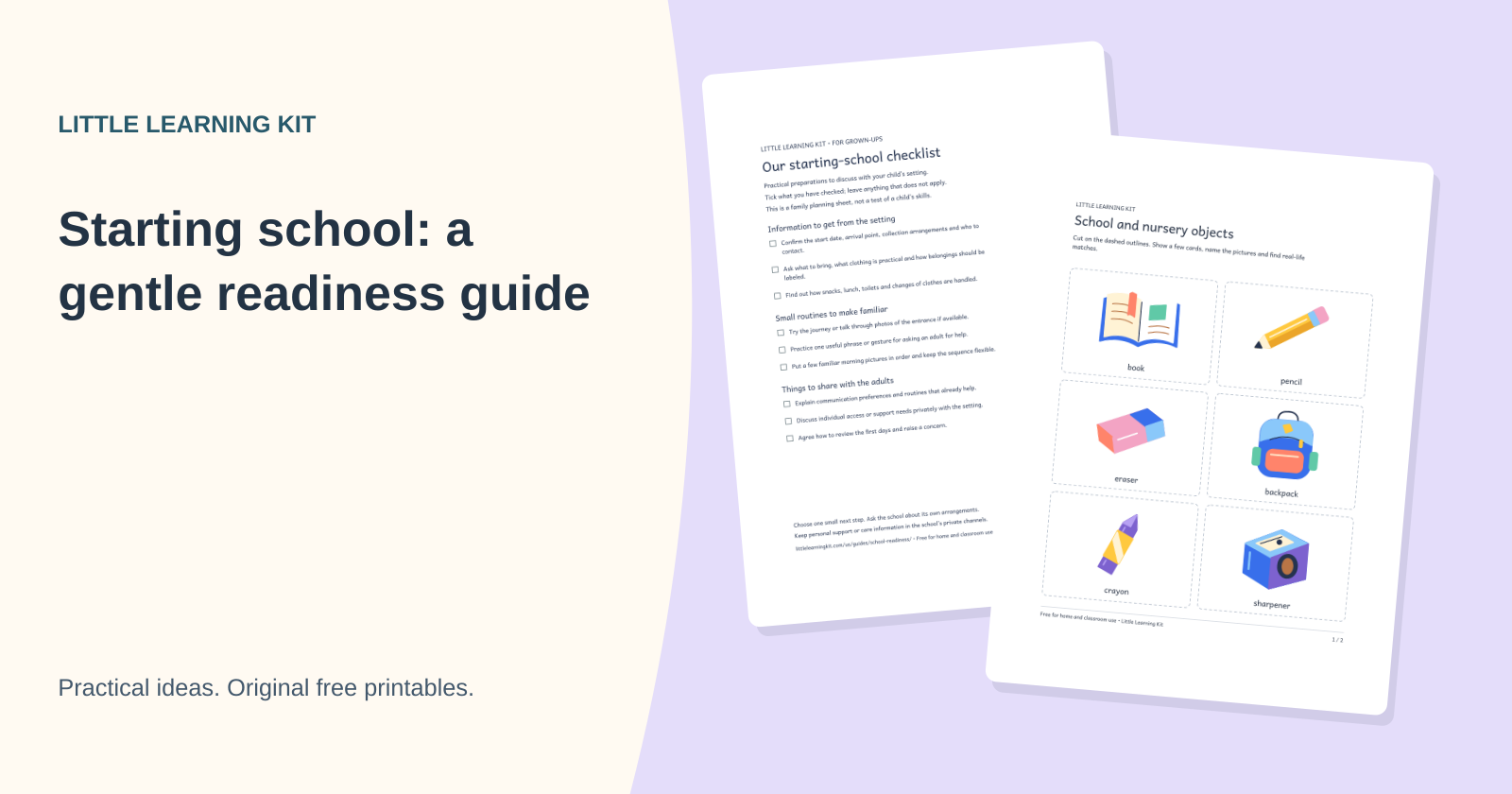
A flexible, practical guide to starting school: familiar routines, asking for help, everyday independence and working with your child’s setting.
Read the guide ↗Use familiar objects, local observations and everyday conversations to explore words, weather and time.
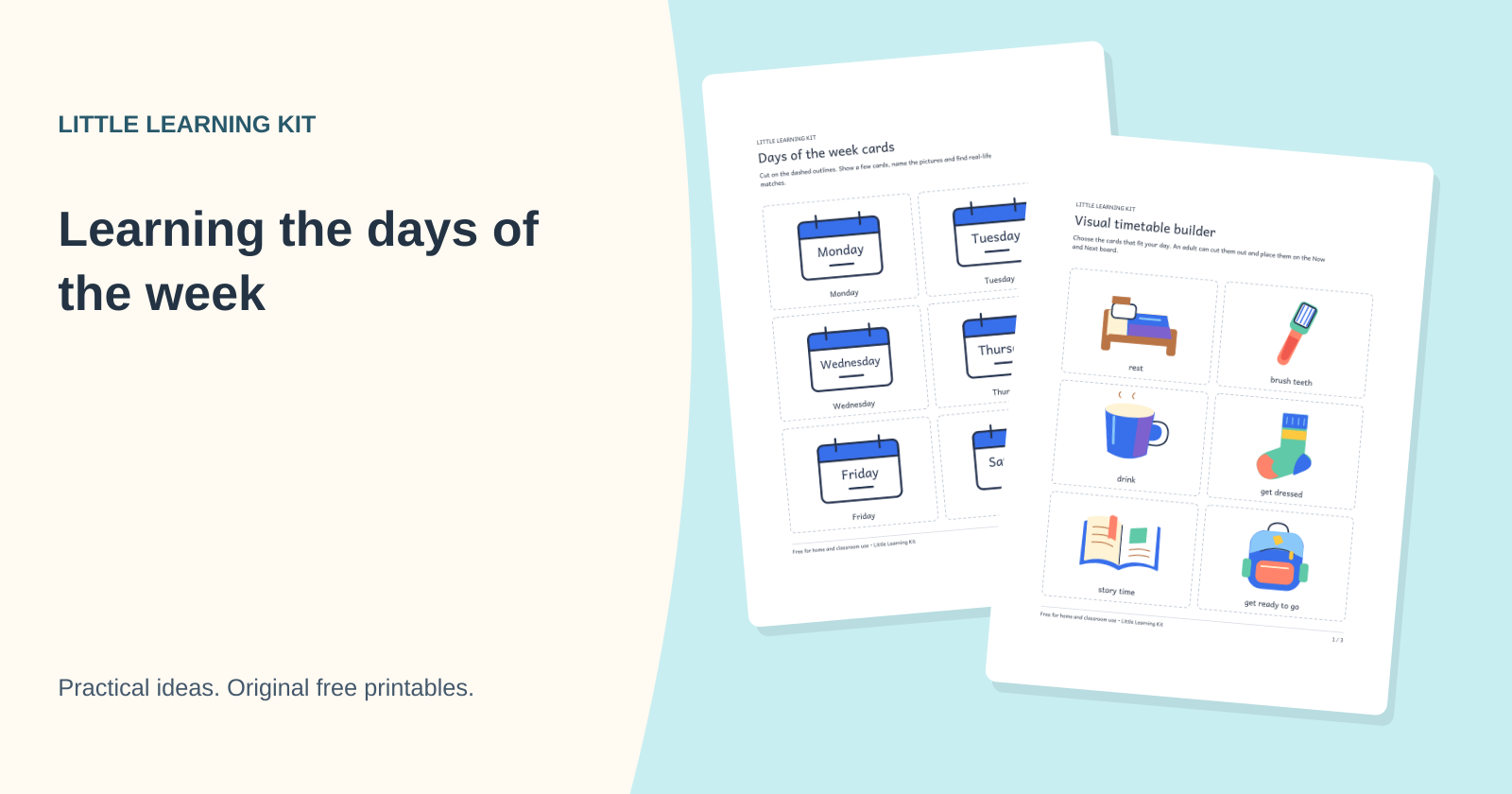
Make day names useful with a small weekly display, familiar events and simple today-and-tomorrow conversations.
Read the guide ↗You do not need to work through these guides in a set order. Choose the question you have now, check the starting skills or materials, and adapt the example to your child. The resource pages show what is in each printable before you download it.
For letters, sounds and handwriting, follow the approach your child’s setting uses. These are independent activities for a grown-up to choose and lead.
Explore the free activities ↗