Notice a particular action, ask whether a certificate appeals and keep its wording true. A design can frame an achievement, but it cannot supply the meaning.
What is the certificate actually celebrating?
A certificate can say, “Someone noticed what I did.” It can also become another way to ask a child to perform for adult approval. The difference starts with the purpose you give it. Before choosing a border, decide which particular action, piece of work or change you want to recognise, and whether a certificate is something the child would enjoy.
V suggested certificates for Little Learning Kit because parents and teachers could use them to celebrate learning: number work, reading, spelling, arts and crafts. She also wanted the designs to grow with the children, with personalised names and an option for a school banner and logo. That is the origin of the tool, rather than a claim that certificates are a proven answer to motivation difficulties.
You can use a certificate occasionally, keep it informal or skip it entirely. A private comment, a photograph of a project kept within the family, or the chance to show someone the work may suit better. The useful question is what this child wants to remember about this effort, not how many awards the adult can issue.
Start with something observable

Specific wording makes the certificate understandable. “For trying another way to group the counters” identifies an action. “For being clever” is a much broader judgment. The CDC guidance on praise and rewards recommends describing the behaviour you are praising. You can apply that principle to a short written message without turning every interaction into a reward system.
Keep the wording true. If the child completed half the project, celebrate the part completed or the idea explored. Do not write that a skill has been mastered because there is a spare line to fill. A certificate from this tool records your chosen celebration; it is not an accredited qualification or an assessment of developmental progress.
Examples you can adapt
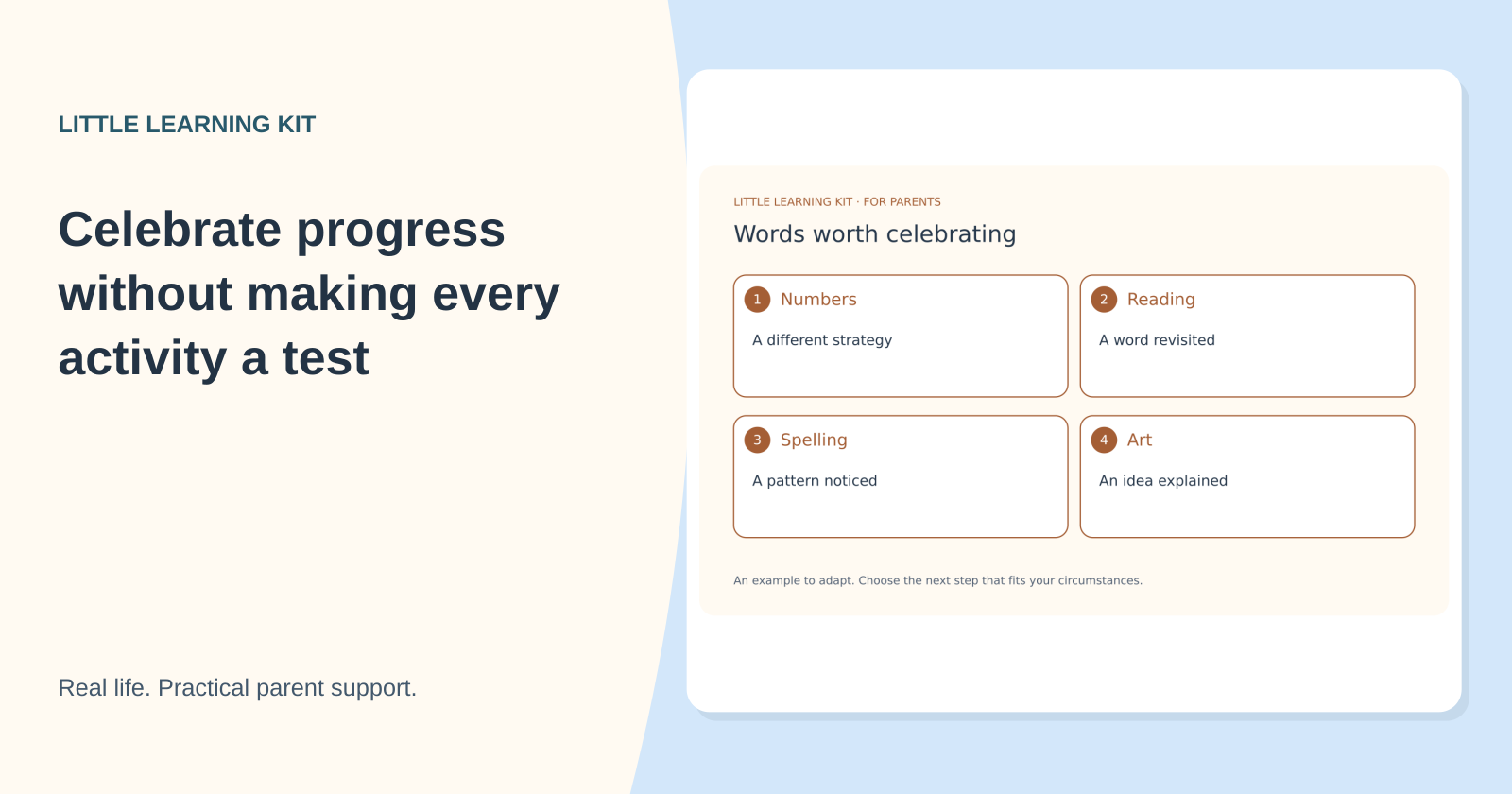
For number work: “For finding two ways to make the same total.” For reading: “For going back to a word and trying again.” For spelling: “For noticing the part of the word we were practising.” For art: “For choosing colours and explaining your idea.” These are example messages, not reports of particular children's achievements.
You can also celebrate returning after a break, asking a useful question or changing a plan. Avoid praising the child for hiding upset, staying silent about discomfort or completing an unsuitable task without help. Effort is worth noticing, but “try harder” is not a substitute for changing a task that needs different teaching or support.
Let the child help choose the look
The certificate maker has four age-inspired styles: woodland, space, creative studio and a cleaner achievement design. The ages are suggestions about appearance, not rules. An older child may love the woodland animals. A younger child may choose the medal. Let the design be a preference instead of another statement about what they should have outgrown.
For teenagers, ask before making a public presentation or putting the certificate on display. Some may enjoy a playful award; others may find it embarrassing. A private acknowledgement with their own wording can be more respectful. The child does not have to demonstrate gratitude for a celebration they did not ask for.
- Describe the specific thing you noticed and check that the wording is accurate.
- Ask whether a certificate would be enjoyable or whether another kind of acknowledgement fits better.
- Choose a design together where possible, without treating the suggested age as a restriction.
- Add a short message that the child can understand or have read to them.
- Decide together how private the finished certificate will remain.
In a hypothetical craft example, a child changes their original plan when a paper wing will not attach. The adult could say, “You tried a different fold and found a way to hold it.” If the child wants a certificate, that becomes the message. There is no need to declare the finished model the best in the room or compare it with a sibling's work.
Make and print it without extra administration
Enter a name if you want it printed, or clear the example to leave a writing line. Choose an achievement category, then edit the message to describe the actual work. Playful and clear lettering are available. Some accented names use the clear font so that the letters print correctly. Check the preview before downloading.
Select A4 or US Letter to match your paper. The certificates are landscape. The low-ink option keeps an outline design, and the blank PDFs let you fill in details by hand. Download the file before leaving or refreshing the page, because the tool resets to its example. Your saved file is then handled by your own browser and device.
For a class, you can make a blank certificate with the school banner and write names by hand, or create individual files. The maker is a simple one-at-a-time tool, so plan around that rather than expecting a class-list import or automatic mail merge. It is often quicker to choose one design and message style before beginning individual personalisation.
School names and logos
Open the school details section to add a group name, an optional logo, who awarded the certificate and a date. Use an image you have permission to use. The logo is processed on the device and embedded in the certificate; it is not uploaded to Little Learning Kit. The file selector accepts PNG, JPEG or WebP within the size limits shown beside it.
Names, messages and logos stay in the page's memory and the output you choose to save. They are not placed in a share URL or browser storage by this tool. That does not control what happens if you later email, upload or display the saved PDF. Schools should follow their own arrangements for handling and sharing pupils' information.
Keep celebration separate from comparison
When several children are involved, avoid a public ranking of who deserved the most impressive certificate. They may be working on different goals with different levels of support. A specific message can recognise one child's progress without implying that another child failed because their result looks different.
Do not withhold ordinary warmth until a certificate has been earned. A child who is finding a task hard still needs help and connection. If awards start producing arguments, bargaining or anxiety, pause and ask what the arrangement is doing. The fact that a design is cute does not mean the system around it is useful.
Review the message a week later if you like: does the child still know what it referred to? Could they tell someone about the work or the decision they made? Those are more useful questions than whether the folder contains a certificate for every subject. It is fine for one carefully chosen celebration to stand on its own.
The next time something catches your attention, say exactly what you noticed before opening the maker. That sentence is the heart of the certificate. The border, name and logo make it personal, but they work best when they frame something real rather than trying to supply the meaning themselves.
Sources & further support
Sources checked 11 October 2026. General information; individual concerns need appropriate professional support.