
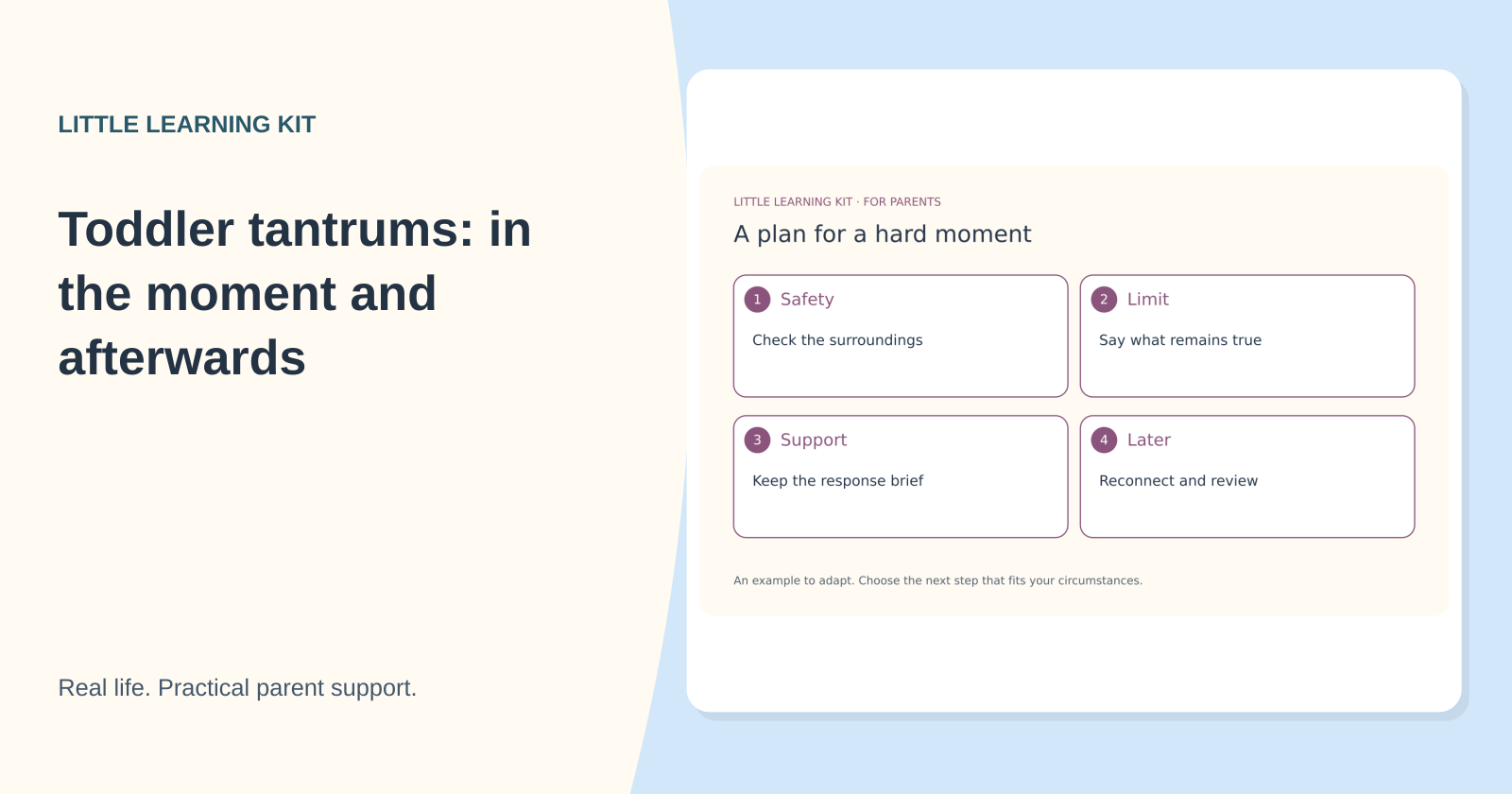
Prioritise safety, keep the necessary limit and reduce the speech. A later conversation can name the feeling and practise an alternative without promising an instant fix.
You do not need to deliver a lesson in the middle of it
A toddler is screaming, other people are looking and you are trying to remember every piece of advice you have ever read. This is a difficult time to invent a thoughtful speech. A more usable plan is to know what you will prioritise in the moment, which boundary remains, and what can wait until the child and adult have more capacity.
There is no wording that guarantees an immediate end to a tantrum. Your response can aim for safety, a clear limit and a way to reconnect. If you measure success only by how quickly a child stops crying, you may miss the useful work of staying nearby, preventing harm or avoiding a threat you cannot reasonably carry out.
The examples below are hypothetical, with room to adapt them. Children differ, including in communication and sensory needs, and the same child may need different help on different days. Persistent or concerning difficulties deserve individual support rather than repeated attempts to apply a generic internet script.
Decide what matters immediately

First look at the surroundings. A supermarket aisle, a pavement beside traffic and a bedroom present different hazards. Keep the child and other people safe. If you need to move to a safer place, say what you are doing as simply as you can. Safety may require practical adult action; it does not require winning an argument about whether the feeling is reasonable.
The NHS guidance on toddler emotions explains the adult role in helping a young child with strong feelings. One practical application is to reduce how much you ask the child to process while very upset. Keep your message brief, avoid adding a catalogue of past incidents and save a discussion of alternatives for later.
Acknowledge the wish and state the limit
In a hypothetical shop example, the child wants a toy that the adult will not buy. A short response could be, “You wanted that toy. We are not buying it today. I am here.” The acknowledgement describes the wish. It does not change the buying decision or promise that the toy will appear later. Say only what you mean and can sustain.
If the child is hitting, add a direct safety boundary: “I will not let you hit.” Use the least intrusive safe response that fits the immediate situation and your child's needs. Avoid threats of abandonment, public humiliation or a punishment invented because an audience has appeared. Other people's discomfort is not a useful guide to what your child needs next.
Work through an example without promising an outcome
Imagine that the shop child drops to the floor near a busy entrance. The adult moves them away from the doorway to a safer space and stays close. They use the short message, stop debating the toy and decide whether the shopping can continue. This example describes decisions the adult can make; it cannot predict when the child will settle.
The adult might finish the essential purchase, abandon the basket according to the shop's arrangements or contact the person expecting them. Which is possible depends on supervision, transport, other children and available help. “Just leave” can be as unrealistic as “Just ignore it.” A workable plan includes the practical constraints, rather than treating them as proof that the parent chose badly.
- Deal with immediate hazards and supervise the child.
- Name the feeling or wish briefly if that is helpful to the child.
- State the necessary limit in plain language.
- Reduce avoidable demands and decide the next safe practical action.
- Revisit what happened when both of you can take part in the conversation.
Some children welcome closeness; others need space within safe supervision. Offer comfort in a way they can use. Do not insist on a hug or an apology as the price of being supported. If your own anger is rising, use whatever safe pause or handover is genuinely available. There may be no second adult, so a plan must also work without one.
The conversation afterwards can be small
Once the child can engage again, describe the event without a character judgment: “You wanted the toy. I said we were not buying it. You hit my arm.” You can separate the feeling from the unsafe action. The child does not need a lecture about being grateful before you explain what you will do to keep people safe next time.
An example alternative might be saying “I am cross,” pointing to an emotion picture, squeezing an appropriate object or asking for help. Choose something that is realistic for that child and situation. Practise briefly at a calm time if it helps. A child being able to name an emotion on a card does not mean they will always manage it during a difficult moment.
Our feelings and routines activities can give you pictures to discuss together. They are conversation materials, not a treatment or a test of emotional control. Keep the activity separate from forcing the child to perform remorse. A picture of a sad face can open a conversation; it cannot tell you everything that caused the distress.
Repair the adult part too
If you shouted or said something unkind, a direct repair can name your action: “I shouted. That was not a good way to speak to you. I am going to try a shorter explanation.” You can apologise for your response while keeping the original reasonable boundary. The child should not be responsible for reassuring the adult or accepting blame for the adult's words.
This is sample wording, not a remembered family story. Use words you can say sincerely. A repair does not erase an ongoing problem, and repeated frightening responses need more than repeated apologies. If you are worried about keeping yourself or the child safe, seek appropriate help promptly and use local urgent services where there is immediate danger.
Look for patterns without turning the child into a project
A brief note after repeated difficult events can help: time, setting, transition, what was asked and what helped or worsened things. Include sleep disruption, hunger or discomfort as observations if relevant, without assuming they explain everything. Avoid recording private details in a shared app or turning each day into a public behaviour report.
Choose one adjustment for the next similar situation. It might be a clearer departure warning, a shorter trip, a quieter place to pause or a plan for an essential purchase. Some difficulties arise from constraints you cannot remove. The goal is to find a feasible change, not construct a life in which a child never encounters frustration.
If tantrums are causing injury, significant family distress or concerns across settings, discuss them with the child's healthcare professional and relevant caregivers. Describe what happens and ask about the next step. You do not have to decide whether the behaviour is “normal enough” before requesting help. An individual response can consider needs that a general article cannot assess.
For the next difficult moment, remember a short sequence: safety, limit, support, later conversation. You can be clear that the toy is not being bought and still recognise that disappointment feels large to the child. Getting through without a perfect performance is a more realistic aim than proving, in front of a shop full of people, that you have found the one correct parenting method.
Sources & further support
Sources checked 11 October 2026. General information; individual concerns need appropriate professional support.